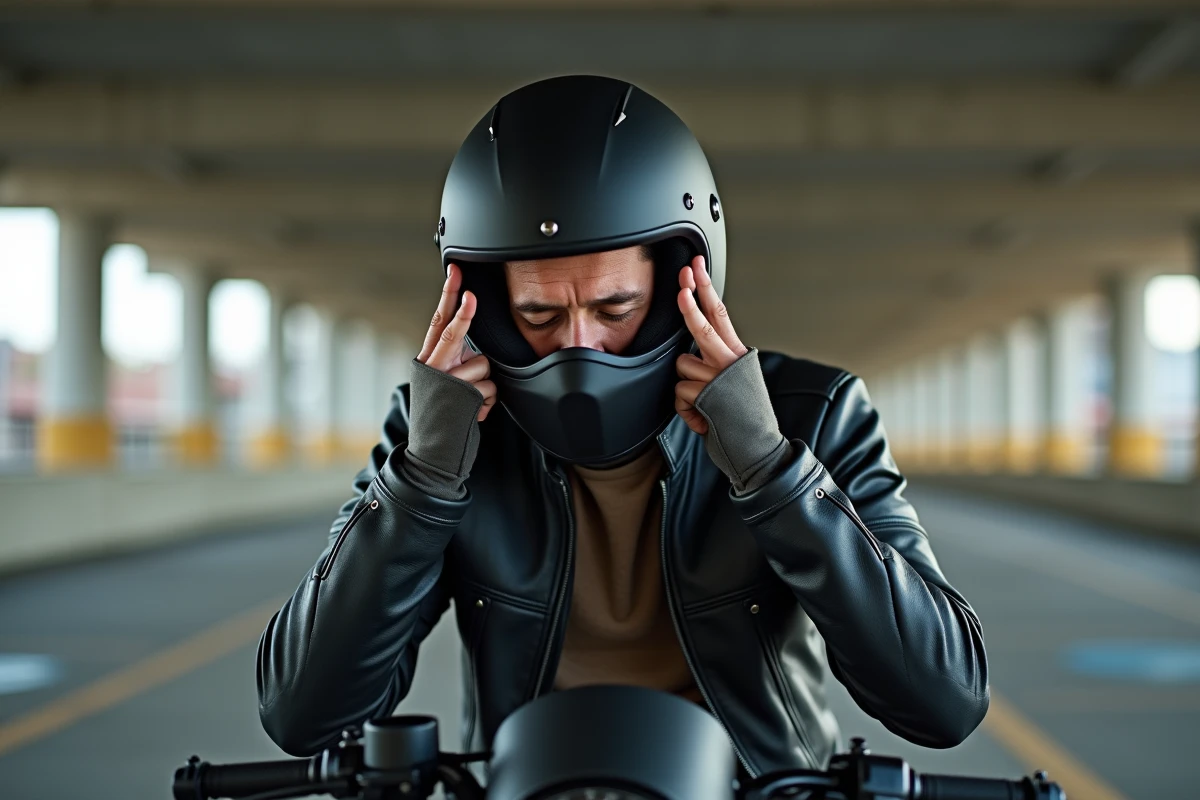
Headaches after a motorcycle ride affect a significant proportion of riders, including those wearing recent and certified helmets. Headache with a motorcycle helmet does not always stem from a size issue: the shape of the shell, ventilation, weight, or cervical muscle tension each play a distinct role. Understanding which factor predominates in your case allows you to address the right variable.
Cranial Morphology and Shell Shape: The Underestimated Factor
Buying guides focus on head circumference in centimeters. This measurement says nothing about the shape of the skull. An elongated skull (dolichocephalic) and a wide skull (brachycephalic) can share the same head circumference while experiencing radically different pressure points in an identical shell.
A helmet designed for an intermediate shape (medium oval) compresses the temples of a wide skull or crushes the forehead and occiput of an elongated skull. These localized pressures trigger tension headaches due to compression of superficial nerves, sometimes in less than thirty minutes.
Some manufacturers offer long oval or round oval shells. Shoei, for example, uses slightly different internal shapes depending on the ranges, which explains why one model fits perfectly for one rider and causes pain for another wearing the same size. To delve deeper into the mechanisms of headaches with a motorcycle helmet, morphological compatibility remains the first criterion to check before any adjustments.

Comparison Table: Main Causes of Headaches Under Motorcycle Helmets
| Cause | Mechanism | Typical Onset Time | Priority Solution |
|---|---|---|---|
| Shell not suited to skull shape | Localized compression of superficial nerves (temporal, occipital) | 20 to 40 minutes | Try a long oval or round oval shell |
| Size too tight | Excessive uniform pressure on the scalp | 15 to 30 minutes | Move to the next size up or change the internal foam |
| Weight of the helmet | Cervical muscle fatigue, tension radiating to the skull | 45 minutes to 2 hours | Choose a lighter helmet (composite fibers, carbon) |
| Insufficient ventilation | Heat accumulation and maceration under the shell | 30 minutes to 1 hour (in hot weather) | Clean the air ducts, check their permeability |
| Chin strap too tight | Compression of the submandibular area, vascular discomfort | 10 to 20 minutes | Adjust the chin strap (a finger should fit between the strap and the chin) |
| Cervical tension related to posture | Hyperextension of the neck on a sports bike, trapezius contraction | 1 to 3 hours | Cervical muscle strengthening, regular breaks |
This table highlights a often overlooked point: the onset time of pain directly indicates the cause. Pain that occurs in less than thirty minutes points to a mechanical compression issue. Late-onset pain suggests muscle fatigue or heat.
Ventilation and Maintenance of Air Ducts: A Common Pitfall
The French Federation of Angry Motorcyclists (FFMC) documented in March 2025 a rising trend in headaches among users of ventilated full-face helmets. The identified cause: the accumulation of fine dust in poorly maintained air ducts. Blocked vents turn a ventilated helmet into a sauna, promoting maceration and an increase in internal temperature.
Since January 2025, EU regulation 2024/1567 mandates mandatory sweat permeability tests for new ECE 22.06 helmets. This regulatory evolution aims specifically to reduce headaches related to maceration under the shell.
In practice, cleaning the air ducts remains the responsibility of the rider. Quarterly maintenance with a fine brush and compressed air is sufficient to maintain airflow. The inner foams deserve regular washing with warm water and mild soap.
Inner Foams: The Role of Thermal Dissipation
Feedback from professional riders, reported by the Moto GP Riders Association (APMG) in October 2025, indicates a significant reduction in headaches after adopting inner foams made of graphene. This material dissipates heat more effectively than traditional polystyrene foams covered with fabric. The adaptation usually takes two to three rides, allowing the foam to conform to the skull.
Helmet Weight and Cervical Tension: Two Related Variables
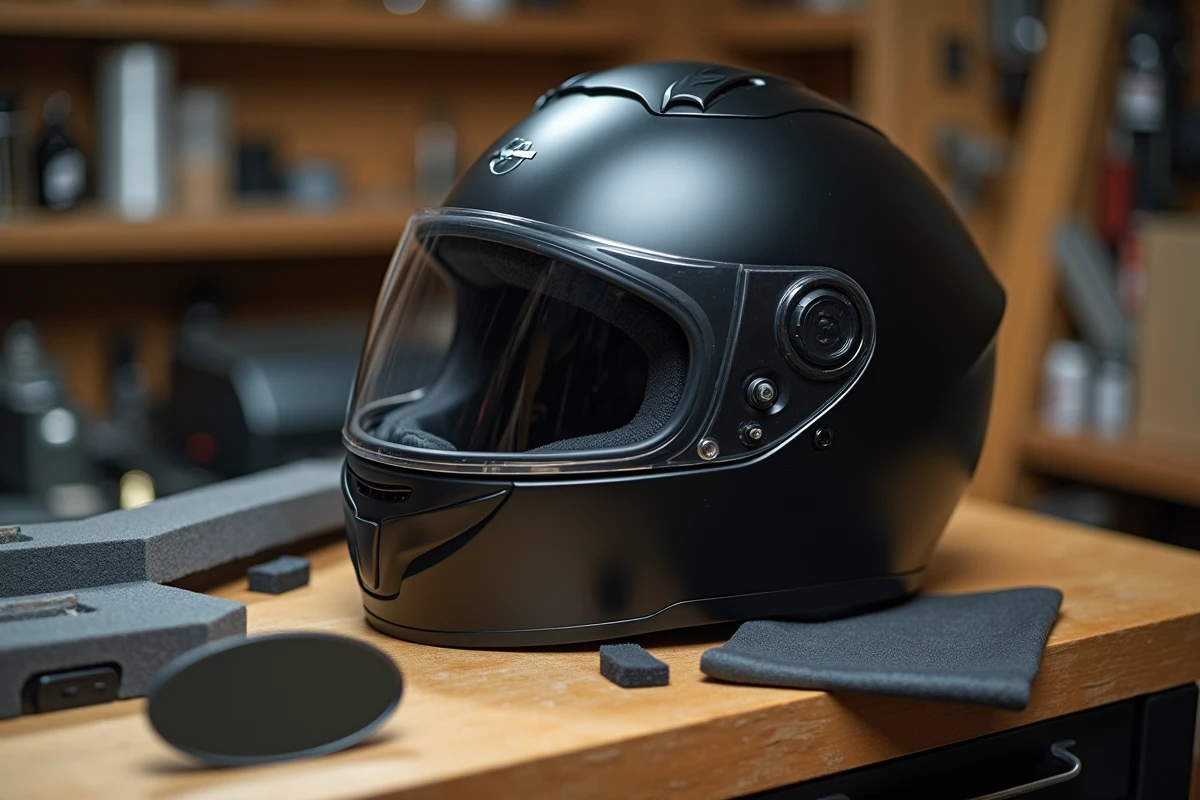
A thermoplastic full-face helmet weighs significantly more than a composite fiber or carbon model. On a twenty-minute urban ride, the difference is imperceptible. On a two-hour ride, the cervical muscles of an untrained rider accumulate fatigue that radiates to the temporal and occipital areas.
Posture amplifies the phenomenon. On a sports bike, the neck works in hyperextension to maintain a horizontal gaze. The trapezius and suboccipital muscles contract continuously, creating a classic tension headache.
- Strengthening cervical muscles through isometric exercises (lateral and frontal manual resistance, three sets of ten seconds, three times a week) reduces fatigue on the road
- Taking a five-minute break every hour of riding allows the muscles to relax and breaks the cycle of cumulative tension
- Choosing a helmet whose weight remains in the lower range of its category (manufacturers indicate weight on the technical sheet) limits the load on the cervical spine
Japanese Shells vs. European Shells: Measurable Differences
A meta-analysis by the IIHS (Insurance Institute for Highway Safety) published in February 2026 shows that Japanese helmets have a lower incidence of headaches than European models. The explanation lies in the flexibility of the internal shells: Japanese manufacturers like Shoei or Arai use softer padding materials that distribute pressure better across the entire skull.
In contrast, some European helmets prioritize firm support for stability at high speeds, which increases pressure on contact points. The choice between thermal comfort and dynamic stability depends on the type of riding: an urban rider will benefit from prioritizing a soft shell, while a track rider will accept a tighter fit.
The most reliable selection criterion remains prolonged fitting in-store, ideally for about fifteen minutes, with the helmet secured. A noticeable discomfort after ten minutes in a static position will become sharp pain after an hour of riding. No technical sheet can replace this test.