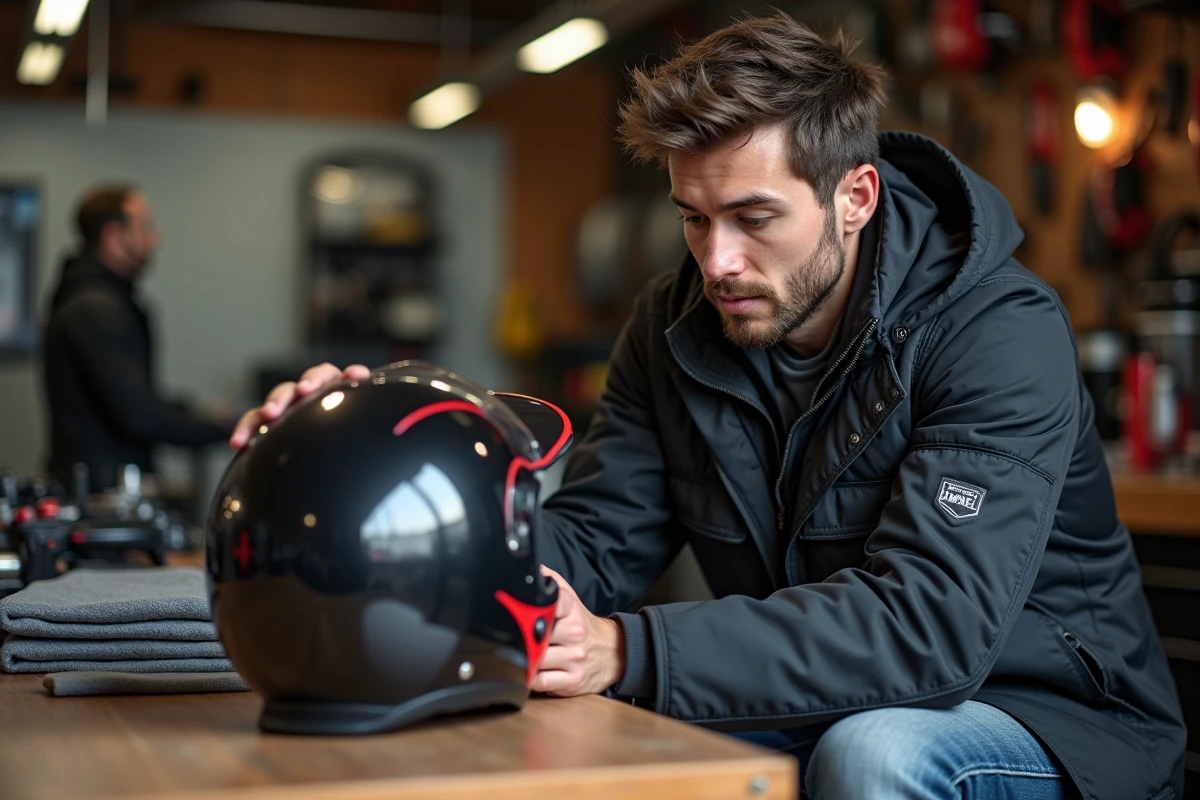
A cold figure to start: 8 out of 10 motorcyclists wear a poorly fitting helmet at least once. This detail, often overlooked, turns the road into a silent ordeal. Because comfort is not a luxury but a necessity for those who cover the miles, there are simple and effective levers to loosen the screws without compromising safety.
Comfort and safety: two essential criteria for choosing the right motorcycle helmet
The helmet is not just a simple shell. It literally holds, between your hands, or rather on your head, the balance between protection and well-being. Too loose, it becomes dangerous. Too tight, it makes every ride painful, even causing the most seasoned riders to lose their concentration. The ideal is this balance point: a firm hold, but never painful, and unwavering stability, chin strap buckled.
Before setting off, it’s best to accurately measure your head circumference and rely on the manufacturer’s size guide. Trying it on is not a formality: it immediately reveals whether the helmet truly conforms to the shape of the skull, without pressure points or harsh discomfort. For peace of mind while riding, only the ECE 22.06 standard certifies that the equipment meets legal requirements.
The choice of materials also weighs in: fiber, carbon, ABS… The weight, robustness, and associated fatigue vary by model. Over long distances, a lightweight helmet makes a difference. Another criterion not to overlook is ventilation. It limits sweating, improves hygiene, and preserves the longevity of the linings.
When the helmet is too tight, there are tips for a helmet that is too small that can transform the experience without compromising safety. Regular maintenance, cleaning, inspecting the foams, and checking the closure prolongs the helmet’s lifespan and reliability. And don’t wait until it’s worn out: replace it every 5 to 7 years, as recommended by manufacturers.
Helmet too tight: how to recognize a poor fit and its consequences on riding
A helmet that is too tight does not deceive anyone. From the first turns of the wheel, pressure on the temples, red marks on the forehead, or a compressed jaw signal that comfort is lacking. It can even lead to feelings of suffocation or headaches, making any head movement difficult. When the helmet does not fit the rider’s morphology, discomfort quickly sets in.
But the problem doesn’t stop at discomfort. A poorly fitting helmet can lose up to 30% of its effectiveness in the event of a crash. Vigilance decreases, fatigue sets in faster, and reflexes dull. Pain and discomfort ultimately distract attention, with direct consequences on safety at the handlebars.
Here are the signals that should raise a red flag:
- Persistent pain localized in the ears, forehead, or jaw
- Difficulty putting on or taking off the helmet
- Feeling of excessive pressure on the head after just a few minutes
- Marks on the skin that take a long time to disappear
On the road, everything relies on a subtle balance: maximum protection, well-measured comfort, freedom to move. As soon as one of the parameters goes off track, the helmet ceases to be an ally and becomes an obstacle.

Concrete solutions to enlarge a helmet that is too tight and regain the pleasure of riding
A motorcycle helmet that is too tight is not a fatality. There are several ways to gain comfort without putting safety on hold. Before any adjustments, ensure that the ECE 22.06 standard is met and that the helmet materials allow for it: polystyrene and internal shell, in particular, do not respond well to shock treatments.
Adjust or replace the internal foams
The key to comfort often lies in the padding foams. Many manufacturers offer foam kits of different thicknesses: simply remove the original elements and replace them with thinner versions. This small adjustment quickly frees up space around the cheeks, forehead, or neck.
To optimize this adjustment, here’s what can be done:
- Opt for interchangeable foams suitable for the brand and model of the helmet
- Contact the manufacturer directly to order the appropriate accessories
Soften the inner lining
Over time, the textile lining eventually loosens. To speed up the process, wear the helmet at home for sessions of twenty to thirty minutes. Some riders wear a thin balaclava under the helmet to facilitate loosening without risking damage to the structure.
If that’s not enough, a motorcycle equipment professional can adjust the pads or padding to fit. This way, you gain the comfort of a custom helmet while maintaining its protection and conformity to each individual’s morphology.
Ultimately, a perfectly fitting helmet promises an intact riding pleasure, a free mind, and control over the road. With comfort restored, every ride regains the flavor of freedom, without compromising on safety.