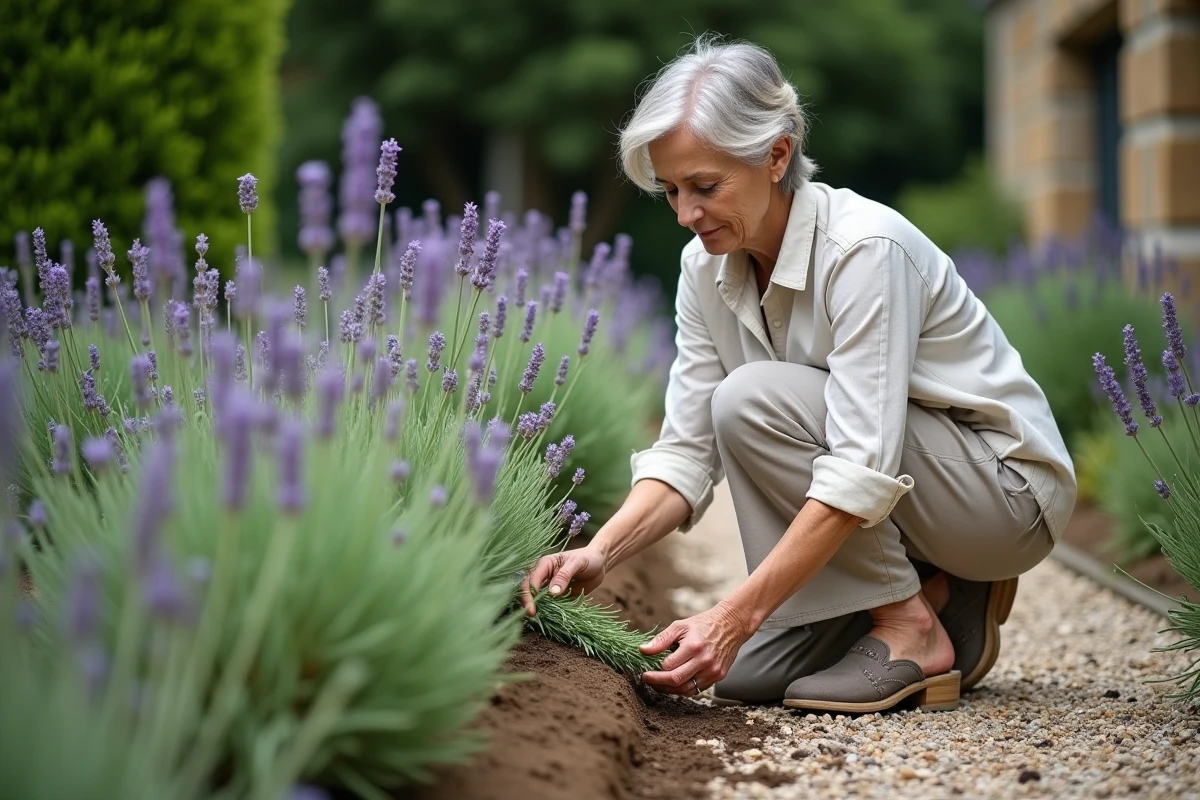
Forty centimeters can change everything between a lavender and a rose bush. It is the invisible boundary between peaceful coexistence and an underground duel where each root defends its territory. Some suggest a distance of 40 centimeters, while others prefer to widen the gap to 60 centimeters to avoid root suffocation and maintain the bed’s airy elegance.
Lavender does not allow itself to be subjected to hostile conditions: it flatly rejects heavy, waterlogged soils. It demands light, shuns the imposing shade of overly vigorous shrubs. But pair it with spring bulbs or discreet plants like thyme or sedum, and the alchemy works. These understated companions take their place without overwhelming it.
Why properly pairing lavender and roses transforms the harmony of the garden
Lavender embodies an attitude: grayish foliage, sharp silhouette, assertive fragrance. Opposite it, the rose bush showcases its flowers, but together they make all living things in the garden thrive. Bees and butterflies flock in. The blooms respond to each other, biodiversity explodes, and the garden comes alive to the rhythm of these natural alliances. Even better, lavender works silently: it keeps flies and mosquitoes at bay, benefiting the rose that the gardener wanted to protect.
Aesthetically, the contrast is striking. The blue-purple of lavender energizes the palette: it disrupts pale roses, converses with bright reds, and extends the blooming season into the heart of summer. This duo does not just please the eye: it promotes the health of the bed, limits diseases, and balances the soil. When the question arises repeatedly, which plants to pair with lavender, it is because it is not just a simple juxtaposition, but a complementarity that changes the game.
However, one must be attentive to their requirements: lavender fears humidity, remains vulnerable to botrytis, demands light soil, plenty of sun, and enough space to breathe. Keep each plant at a good distance, avoid overcrowding, and you give each species the chance to thrive unhindered. In the end? A flourishing bed, populated with pollinators, stable and alive all year round.
Which plants to choose to enhance lavender and promote a healthy garden?
To create sustainable beds, lavender pairs well with hard soil, impeccable drainage, and full sun. Mediterranean plants are a must: they share its minimalist lifestyle, highlight its silhouette, and enhance local biodiversity.
Among the species to prioritize, here is a coherent selection to accompany lavender:
- Rosemary: its structure persists even in winter, shaping the bed’s relief without competing.
- Thyme: its creeping form protects lavender and retains just the right amount of moisture at its base.
- Santolina: its soft texture and silver color extend the graphic note and repel certain unwanted insects.
- Grasses (Stipa, fescue): they bring movement, lighten the density, and showcase lavender.
To add rhythm and new colors, yarrow or echinacea offer yellow or purple flowers with refined graphics, while sedum and sage ensure volume and a bloom that lasts from spring to autumn. A phormium or sea lavender (Limonium) multiplies contrasts, provided it is noted that the latter belongs to a different family. In these mixed plantings, the bed transforms: it withstands drought better, attracts a host of beneficial insects, and scents the season.
Planting distances and practical tips for successfully pairing lavender and roses
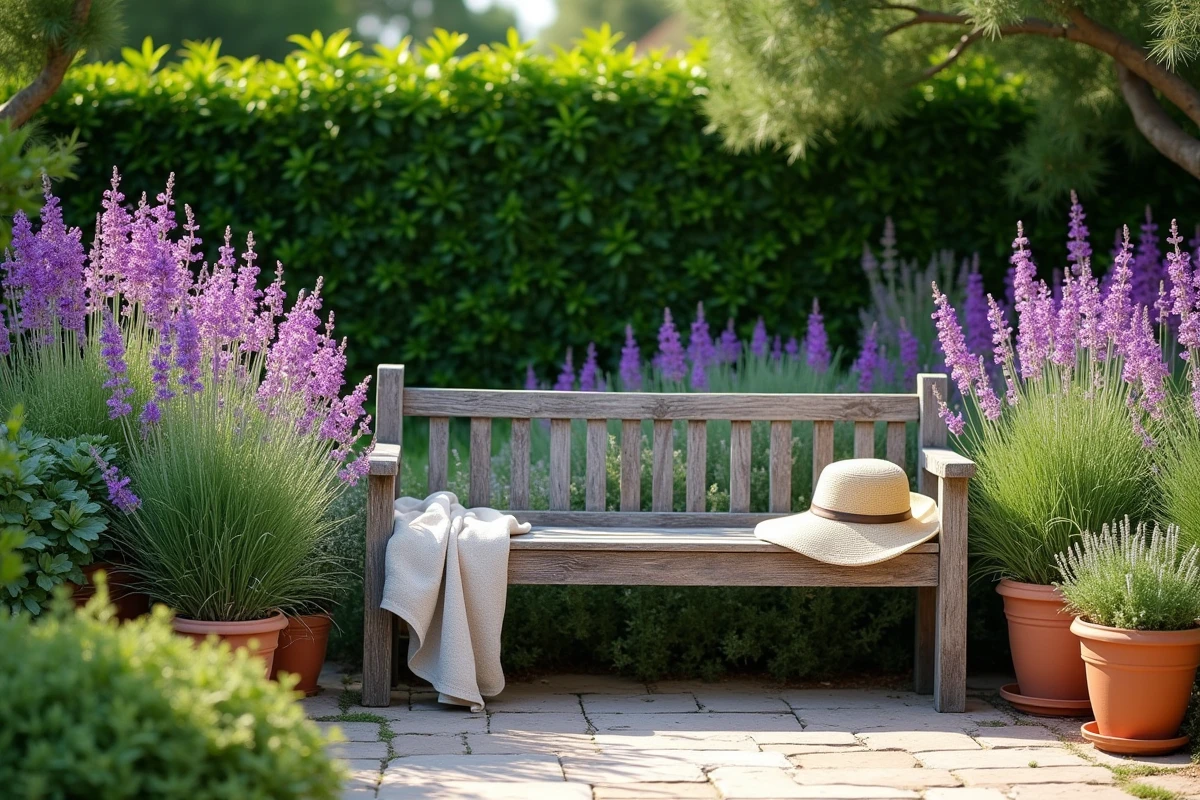
Planting lavender and roses is about playing with codes: elegance, balance, but above all, the art of soil. Favor light, sandy, or calcareous soil, eliminate stagnant moisture, and let each specimen express itself in the sun. The best lavenders (angustifolia, officinalis) require this setting to thrive sustainably.
Maintain a distance of 40 to 50 centimeters between each plant: light, air circulation, and no unnecessary rivalry. Thus, fungi like botrytis find a closed door, and each plant benefits from a healthy space. Watering should be moderate; lavender endures drought, while the rose requires more water, but cohabitation works as long as the soil avoids excess.
The ideal time for planting is in spring or autumn, when temperatures are moderate. After blooming, prune to keep lavender compact. A mineral mulch protects its crown and secures the base. Some regions require winter cover, but this lavender-rose duo impresses with its generosity and simplifies garden care.
To maximize the success of the pairing, keep these elements in mind:
- Soil: well-drained, calcareous or sandy
- Exposure: full sun
- Distance: 40 to 50 cm between each plant
- Maintenance: annual pruning, moderate watering, mineral mulch
In this carefully orchestrated setting, lavender sets the tempo. Roses, aromatic herbs, and Mediterranean perennials harmonize, season after season, leaving the garden with an imprint of balance that remains unbroken.