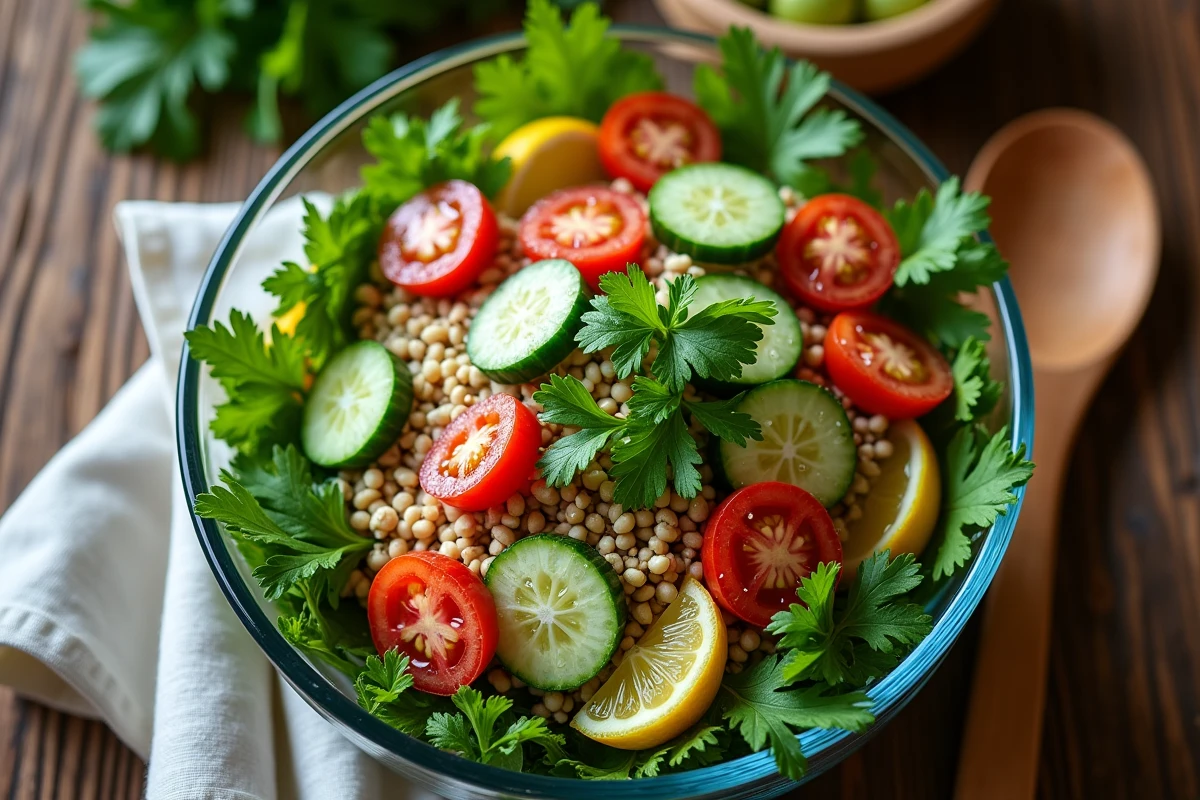
Tabbouleh does not freeze well. Waterlogged tomatoes, delicate herbs, and semolina that absorbs liquid upon thawing: each component reacts differently to negative cold. Freezing homemade tabbouleh is possible, but the result largely depends on the chosen recipe and the method applied before placing it in the freezer.
Flash freezing or standard freezing: what changes for tabbouleh
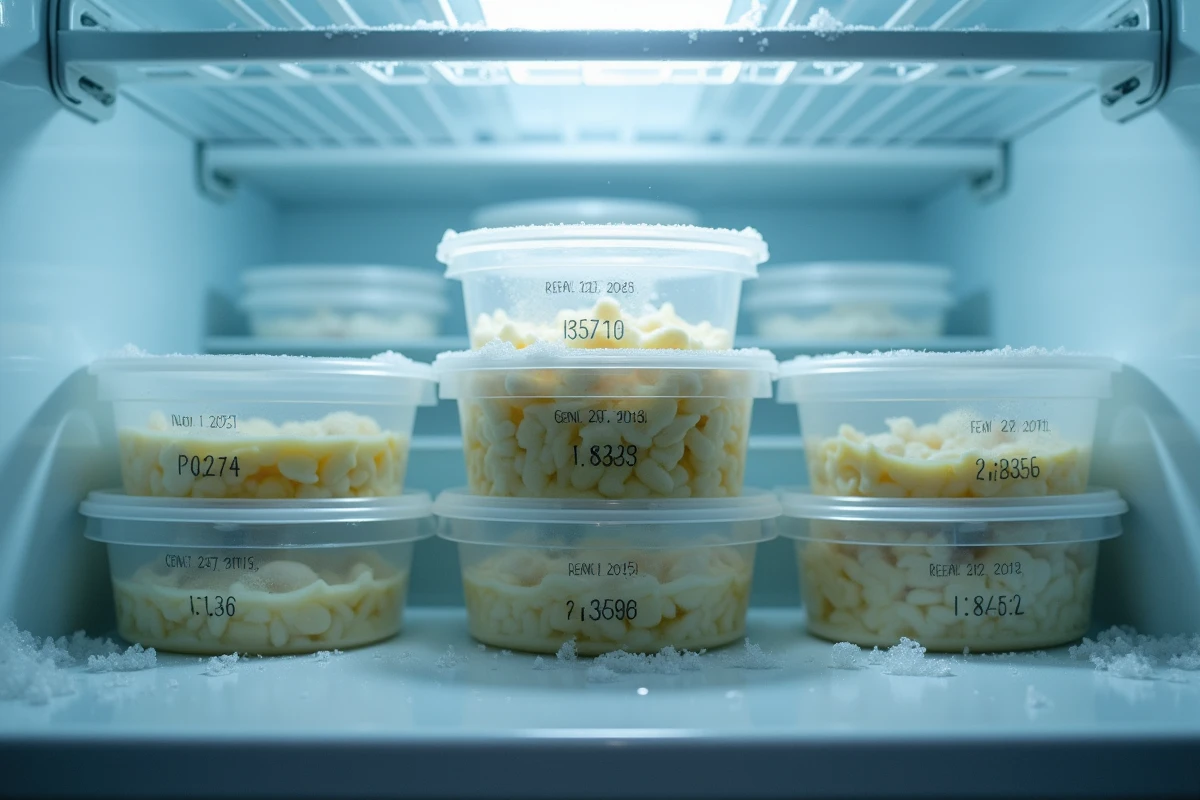
Standard freezing, around -18 °C, produces relatively large ice crystals. These crystals puncture the cell walls of vegetables and herbs, which explains the mushy texture upon thawing.
Flash freezing at much lower temperatures forms much finer crystals. The cellular structure of tomatoes and parsley is better preserved. This technique is limited to professional equipment or high-end home appliances, but it explains why industrial frozen tabbouleh maintains a texture that homemade freezing does not replicate.
If you are looking for tips for freezing tabbouleh and thawing it correctly, the choice of freezing method is as important as the recipe itself.
French tabbouleh or Lebanese tabbouleh: which withstands the freezer better
The so-called “French” tabbouleh is based on wheat semolina, seasoned with olive oil, lemon, diced tomatoes, mint, and sometimes bell pepper. Traditional Lebanese tabbouleh reverses the proportions: flat-leaf parsley is the base, with very little bulgur.
French tabbouleh freezes better than the Lebanese version. The hydrated semolina withstands freezing without disintegrating as much as fresh parsley, which darkens and softens upon thawing. Tomatoes pose a problem in both versions, as their high water content causes juice to be released upon thawing.
The distinction between “cold” preparation (common French version) and traditional cooked then cooled preparation also alters behavior in the freezer. Bulgur that has undergone hot cooking absorbs moisture differently and rehydrates more evenly after thawing.
Preparing tabbouleh before freezing: ingredients to separate
Freezing tabbouleh all assembled is the simplest method, but also the one that yields the least favorable result. After a day or two in the freezer, the texture may still hold up, but beyond a week, tabbouleh noticeably loses its structure.
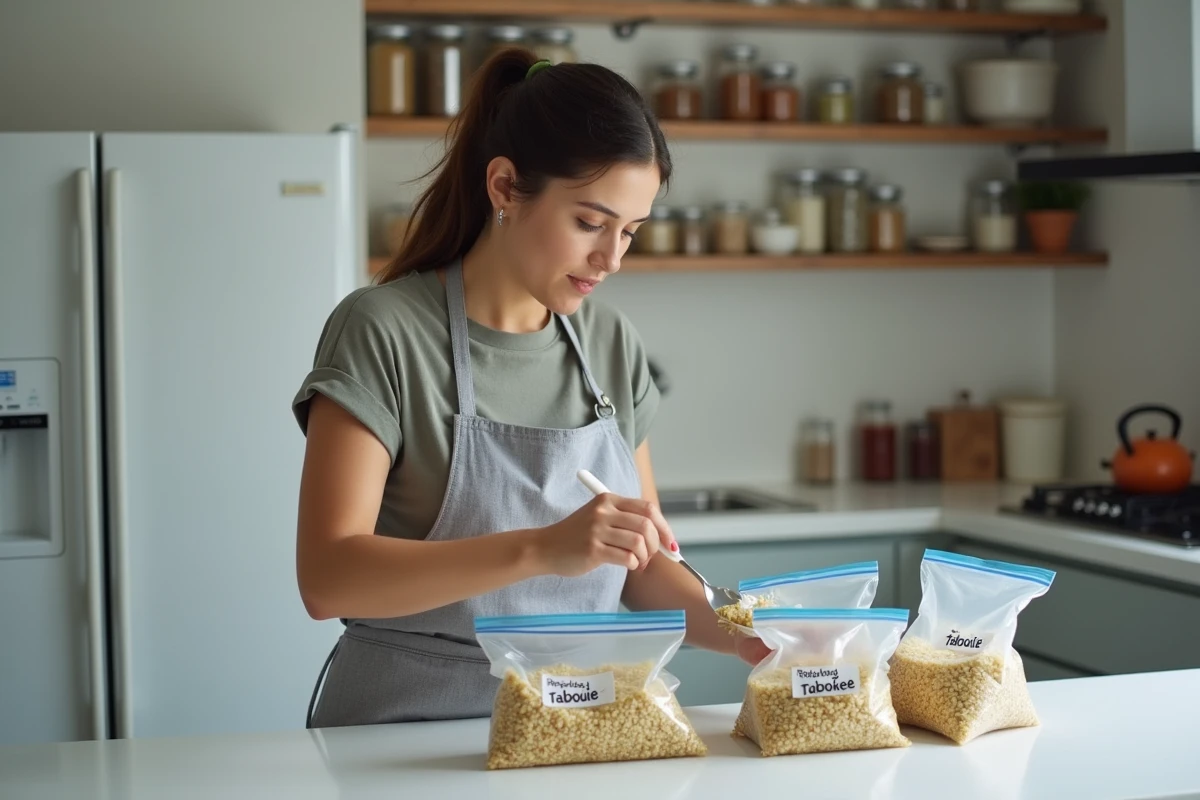
A more reliable approach is to freeze the semolina base and the toppings separately. Here are the elements to handle separately:
- The semolina or bulgur, cooked and drained, seasoned with olive oil to prevent it from forming a compact block in the freezer
- The tomatoes, diced and drained on paper towels to remove as much juice as possible before freezing
- Fresh herbs (mint, parsley), which lose their crunch upon thawing and are best added only at serving time
- The dressing (olive oil, lemon juice, seasoning), kept separately in a small airtight container
This method requires more organization, but it allows you to assemble a tabbouleh whose texture remains close to fresh. The semolina alone freezes easily for several weeks.
The seasoning trap before freezing
Lemon juice and salt accelerate the release of water from vegetables. A seasoned tabbouleh that is then frozen sits in its juice upon thawing, which drowns the semolina. Seasoning after thawing, at serving time, limits this phenomenon.
Thawing tabbouleh: refrigerator or room temperature
Thawing in the refrigerator remains the safest method from a food safety perspective. Allow several hours for the tabbouleh to reach an even temperature. Thawing at room temperature speeds up the process but encourages bacterial growth, a risk not to be overlooked for a dish made with raw vegetables.
Never refreeze tabbouleh that has already been thawed. This rule, applicable to most preparations made with fresh vegetables, is even more relevant here as the ingredients of tabbouleh are particularly sensitive to temperature variations.
When serving, adjust the seasoning. Add a drizzle of fresh lemon, a few chopped mint leaves, and a splash of olive oil. These additions compensate for the loss of flavors due to freezing.
Freezer storage duration and alternatives to freezing
The available data does not allow for a universal duration, as the quality of frozen tabbouleh depends on the recipe, the container, and the consistency of the freezer temperature. Most culinary sources recommend not exceeding a few weeks for a satisfactory result.
In contrast, refrigerating for one to two days in an airtight container remains the option that best preserves flavors and texture. For large quantities prepared in advance, freezing only the semolina base and preparing the toppings on the same day is the best compromise between waste reduction and taste quality.
Tabbouleh is not a dish designed for long-term storage. Its freshness relies on raw and volatile ingredients, from lemon to parsley. Adjusting quantities to the number of diners remains the simplest way to avoid the freezing dilemma.