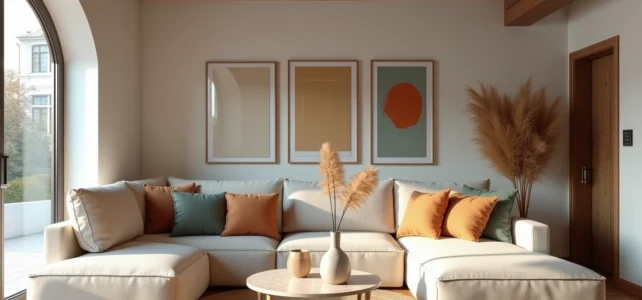
Transforming an interior is not just about accumulating trendy objects. The choice of materials, colors, and furniture arrangement creates measurable effects on the perception of a space, its brightness, and even its acoustic comfort. Comparing the available decor levers allows you to identify those that truly change the atmosphere of a room, without wasting time or budget.
Visual Impact by Decor Lever: What Really Changes a Room
Not all decor changes are equal. Some alter the perception of a space in just a few hours, while others require a heavier investment for sometimes subtle results. The table below ranks the main levers according to their visual impact, relative cost, and implementation difficulty.
Recommended read : Tips and Ideas to Strengthen Family Bonds Daily
| Decor Lever | Visual Impact | Relative Cost | Difficulty |
|---|---|---|---|
| Wall Color (paint, wallpaper) | Very High | Low to Medium | Accessible |
| Lighting (multiple sources, variable intensity) | High | Low | Accessible |
| Flooring (parquet, tiles, vinyl) | Very High | Medium to High | Intermediate |
| Main Furniture (sofa, table, bed) | High | High | Accessible |
| Textiles (curtains, cushions, rugs) | Medium | Low | Accessible |
| Plants and Natural Elements | Medium | Low | Accessible |
| Accent Wall or Decorative Niche | High | Low to Medium | Intermediate |
The wall color and flooring top the rankings. They are the largest surfaces in a room: changing them means altering the entire backdrop. In contrast, textiles, often presented as the miracle solution, offer a more limited impact when the rest of the room remains unchanged.
Resources like madmoizl-deco.com allow you to visualize these combinations before making purchases, reducing mistakes in color or material choices.
See also : How to Easily Make Hot Soups with Your Nutribullet: Tips and Recipes

Colors and Walls: The Most Cost-Effective Lever for Your Interior
Painting a single accent wall in a bold color (navy blue, olive green, terracotta) transforms the perception of an entire room. The eye is drawn to this surface, and the perceived depth of the space changes immediately.
Limiting your palette to two or three main tones per room avoids visual saturation. A unifying color developed in shades on the walls, furniture, and accessories creates a coherence that the eye recognizes effortlessly. Warm shades (terracotta, mustard, coral) warm up a north-facing living room. Cool shades (blue, aqua green) visually enlarge a compact room.
Patterned Wallpaper or Solid Paint
Geometric or botanical patterned wallpaper works particularly well in transitional spaces (entryway, hallway) where it creates a focal point without overwhelming daily life. In a living room or bedroom, solid paint remains more versatile, as it better accommodates changes in furniture over time.
Combining wallpaper on one wall and a coordinated paint on the other three offers a good compromise between character and sobriety. The accent wall remains the decor gesture with the best effort-result ratio.
Light and Furniture Arrangement: The Two Underestimated Angles
Lighting conditions how colors and materials appear. A room painted in pearl gray can seem warm under warm indirect lighting or cold and dull under a single white ceiling light.
- Multiplying light sources (table lamps, wall sconces, string lights, reading lamps) allows you to modulate the atmosphere according to the time of day without touching the fixed decor.
- Dimmable bulbs transform a kitchen into a convivial space in the evening, after serving as a functional workspace during the day.
- Placing a mirror facing a window or perpendicular to the source of natural light increases perceived brightness, especially in long rooms.
- Replacing opaque curtains with light sheers lets in light without sacrificing privacy, radically changing the atmosphere of a bedroom or living room.
Rethinking the Flow Plan
Moving a sofa a few centimeters or reorienting a table can free up a passage, clear a view, or create a distinct zone in an open space. Furniture positioned with its back to the entrance visually partitions without a wall. This technique works well in kitchens open to the living room, where a low piece of furniture or an island is enough to delineate two functions.
Natural Materials and Wood: Anchoring a Sustainable Style
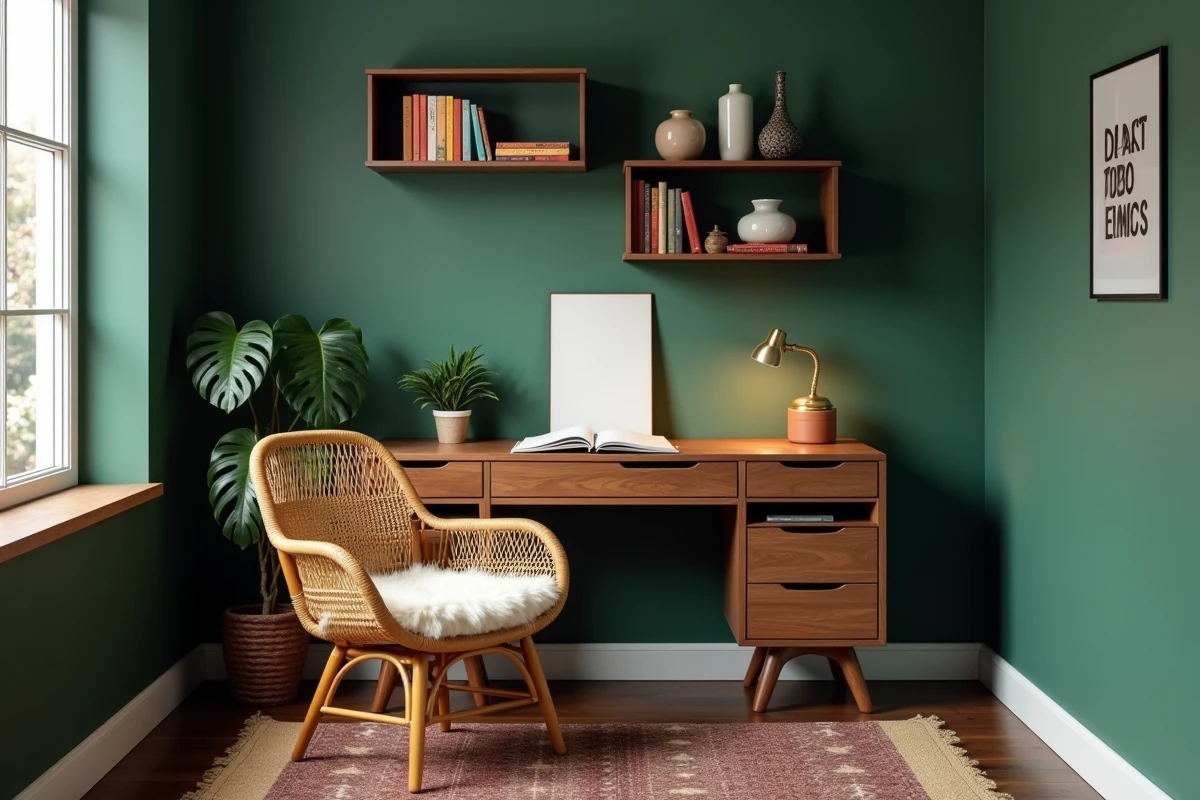
Wood, rattan, linen, and raw cotton bring a texture that synthetic materials struggle to replicate. Mixing two or three natural materials in the same room (a wooden piece of furniture, a jute rug, linen cushions) provides a tactile coherence that anchors the style, whether modern, Scandinavian, or bohemian.
Solid wood withstands changing trends. An antique oak or walnut piece of furniture, sanded and oiled, fits well in both a minimalist design and a more cluttered interior. Light woods (ash, birch) enlarge a space and enhance brightness. Dark woods (walnut, wenge) add depth and a more pronounced character.
Plants and Biophilia in Interior Design
Introducing green plants is not just a trend. Foliage creates contrasts in shape and color that classic decorative objects do not produce. A group of three plants of varying heights structures an empty corner better than a side table.
Hanging plants utilize vertical space and draw the eye upward, increasing the sense of volume in rooms with low ceilings. Paired with terracotta or wicker planters, they enhance the palette of natural materials without straining the decor budget.
The most effective lever for transforming an interior remains the combination of two targeted actions: changing the color of the main wall and reworking the lighting. These two gestures, accessible and reversible, change the perception of a space even before touching the furniture. Natural materials and plants complete the picture by adding texture and relief, with a controlled cost.