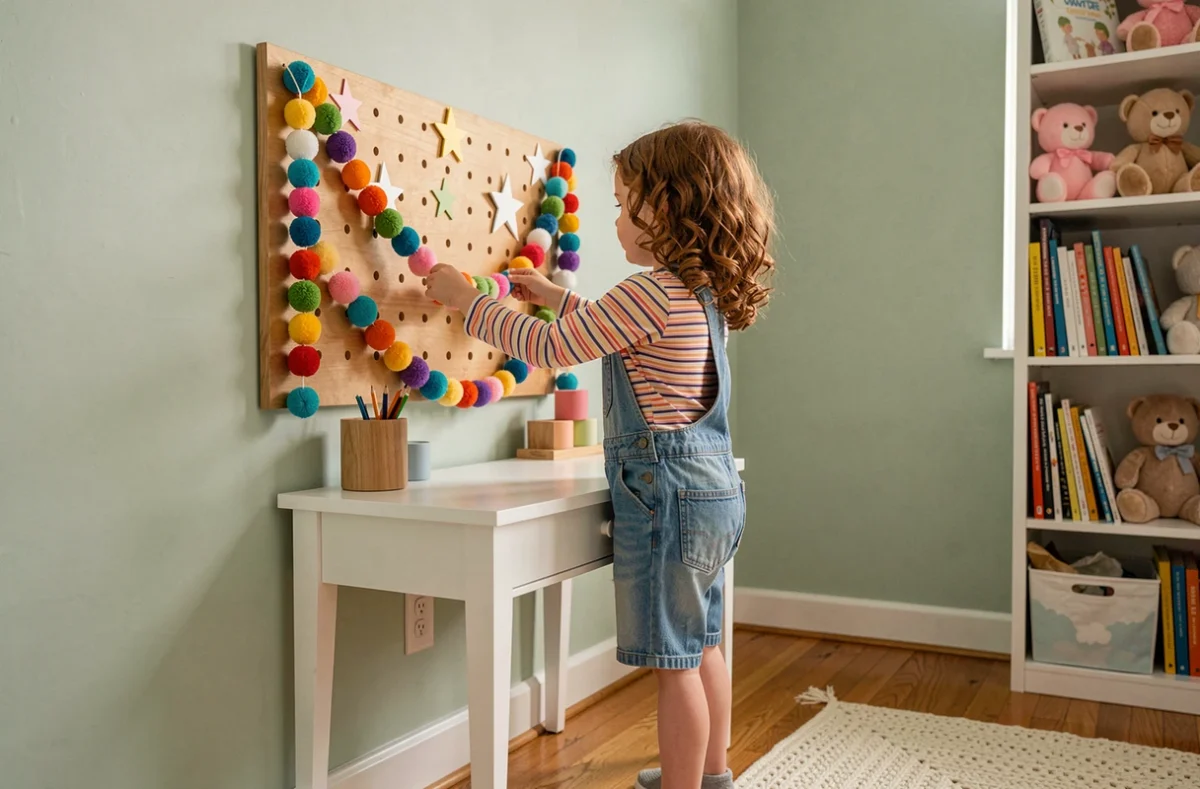
A three-year-old child pulling on the door of a wardrobe too high for them, piles of clothes collapsing every morning, a freshly painted room with a paint that emits a lingering odor for weeks: we all know these situations. Brightening up a child’s room and wardrobe is not just about choosing pretty colors. Practical, health, and safety constraints influence every decision, from the furniture to the textiles hanging on the rack.
Air Quality and Children’s Room Paint: The Overlooked Criterion
When deciding to refresh the walls of a child’s room, the first instinct is often to choose a shade. The real question arises beforehand: what substances will this can of paint release into the air that the child breathes for eight to ten hours a night?
Paints, glues, particle boards, and certain wall coverings can emit volatile organic compounds (VOCs). The French A+ label indicates the lowest emissions, but it does not exempt you from thoroughly airing out after the work or the installation of new furniture. We tend to close the window as soon as the smell disappears, while some VOCs are odorless.
For wall decor, low-VOC washable paints have two advantages: they resist fingerprints and preserve indoor air quality. You can explore bright colors (saffron yellow, sage green, duck blue) without sacrificing the child’s respiratory health. On jolis-momes.fr, you can also find wardrobe pieces that easily coordinate with these palettes.
A often forgotten point: never obstruct ventilation grilles with furniture or curtains. Recommendations applied in establishments hosting children in Paris (annual checks of ventilation systems, measurement of carbon dioxide) provide a useful framework to transpose at home. Renewing the air for at least ten minutes morning and evening remains the simplest gesture.
Anti-Tip Furniture Fixings: Safety Before Decor
A wardrobe, a dresser, or a shelf tipping over onto a child is a serious yet preventable household accident. The EN 14749+A1:2022 standard assesses the stability of the furniture itself, but it does not cover the strength of the wall or the choice of fixing. In other words, compliant furniture can still tip over if it is placed against drywall without the appropriate anchor.
Before installing a storage column or a wall rack in the room:
- Identify the type of partition (plasterboard, hollow brick, concrete) to choose the corresponding anchor. A Molly anchor for plasterboard, a chemical anchor for hollow brick.
- Always secure the furniture to the wall with a strap or a metal bracket, even if the manufacturer does not provide one. Anti-tip kits can be found for just a few euros.
- Place the heaviest items (books, toy bins) in the lower compartments. A low center of gravity reduces the risk of tipping when the child climbs or pulls out a drawer.
This reflex changes the way we think about layout. We no longer choose furniture solely for its style or color, but first for its compatibility with the available wall.
Children’s Wardrobe in Sustainable Materials: Wood, Reuse, and Sewing
The classic reflex when a child grows: buy new, store the old in a garbage bag, repeat six months later. There is another logic, centered on reuse and repair.
Solid Wood Furniture Instead of Particle Board
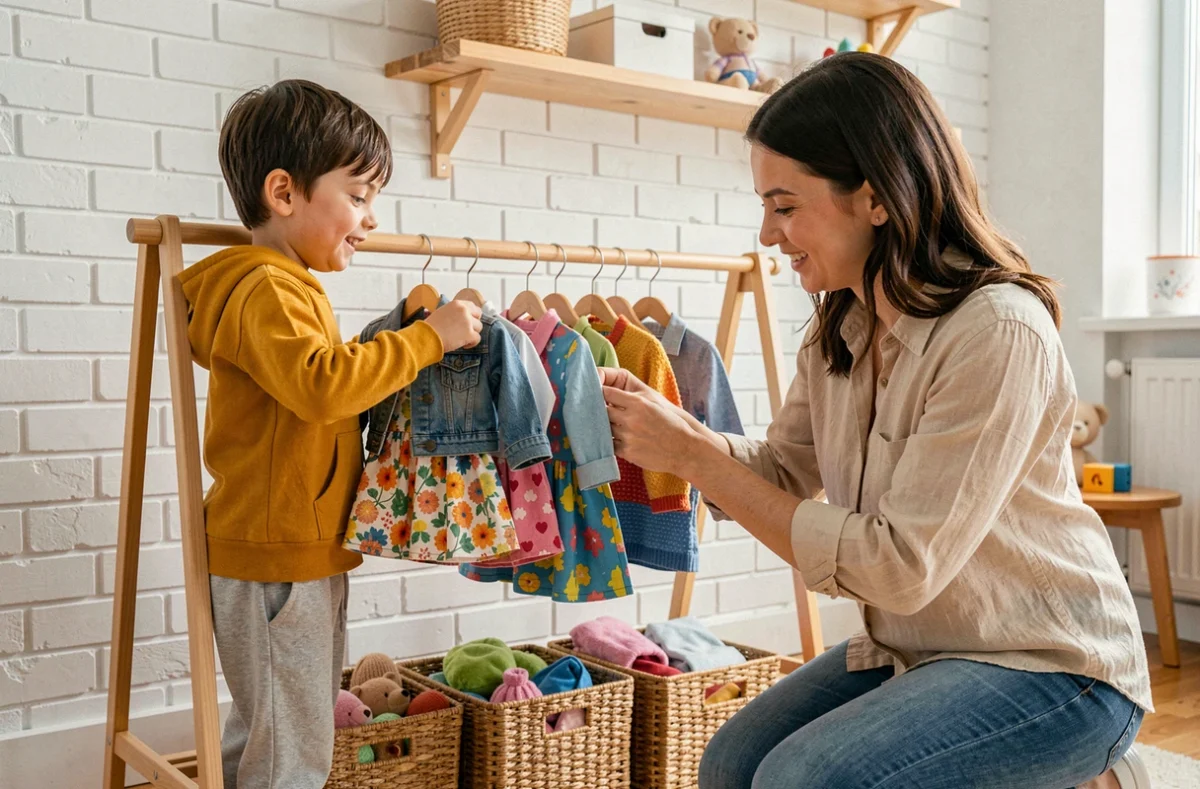
A solid wood piece can be sanded, repainted, and resold. A particle board piece, once damaged, ends up in the landfill. The initial cost is higher, but when spread over the years of use (and the possibility of resale), the gap narrows. For the room, a raw wood rack and a few hooks are often enough to organize everyday clothes without resorting to an imposing wardrobe.
Sewing and Free Patterns to Personalize the Wardrobe
Customizing a basic garment with a hand-sewn patch, lengthening pants with a contrasting cuff, turning a sheet into a cushion cover that matches the curtains: these sewing projects add style to the room without generating waste. Free patterns can be found online to sew decorative accessories (banners, wall storage pouches) from fabric scraps.
Repairing rather than throwing away aligns with the goals of the AGEC law on reuse and recycling. Practically, a sewing workshop with the child (from five or six years old, with appropriate scissors) also becomes a creative activity that involves them in taking care of their belongings.
Colors and Wall Decor: Creating an Evolving Space Without Starting Over
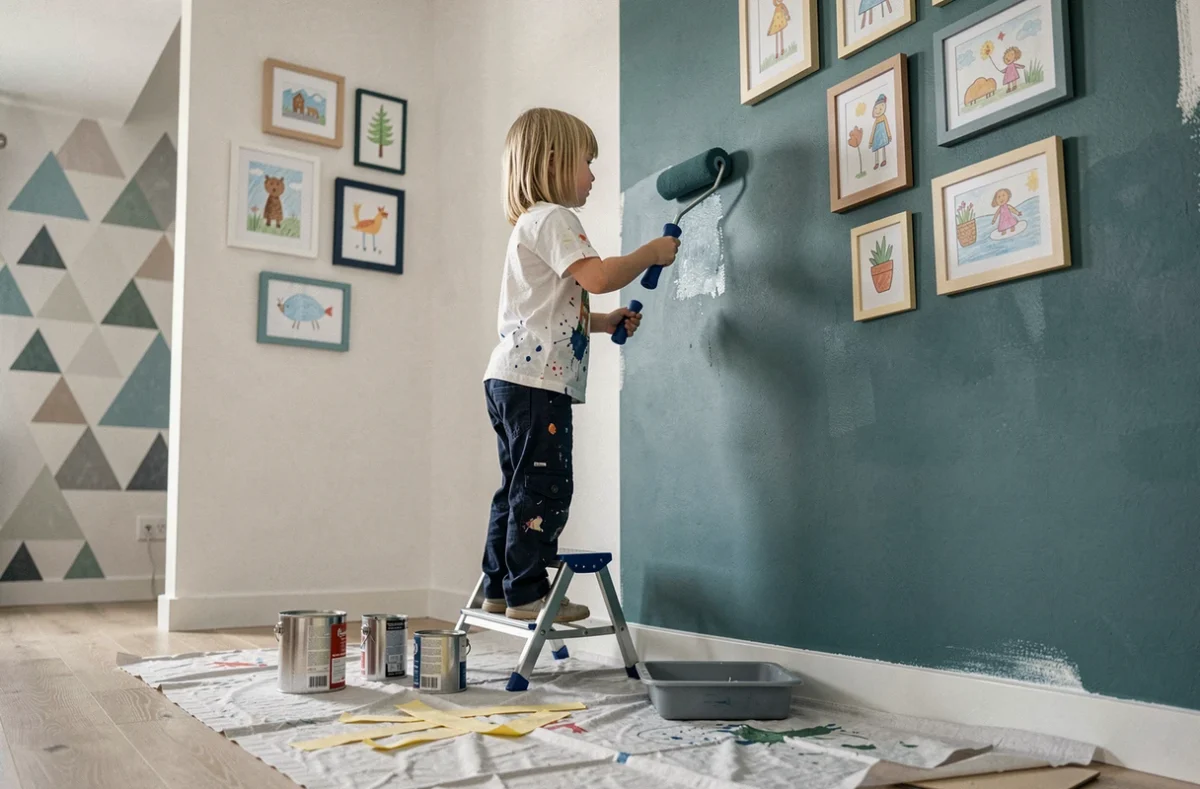
Painting an entire wall in a bright color works well until the child changes their taste. A more flexible approach: limit the strong color to one wall or a frieze, and keep the other surfaces in a neutral shade. When preferences evolve, you repaint a smaller area.
Repositionable wall stickers and framed posters offer an easy-to-modify decor complement. You can match them with the textiles in the room (duvet cover, curtain, rug) to create visual coherence without permanent commitment.
Feedback varies on the durability of stickers depending on brands and wall types, but on a well-dried matte paint, most last several years without leaving marks upon removal. It’s best to test on a discreet corner before covering an entire wall.
Combining two or three complementary colors in the room (wall, textile, storage accessory) is enough to give character. The trap would be to multiply shades: beyond three, the space loses readability, and the child finds it harder to organize their belongings.
Creating a room that pleases the child and functions daily relies on both technical and aesthetic choices. A well-secured piece of furniture, low-emission paint, clothes that are repaired instead of replaced: these decisions structure a healthy, sustainable space that allows room for creativity.