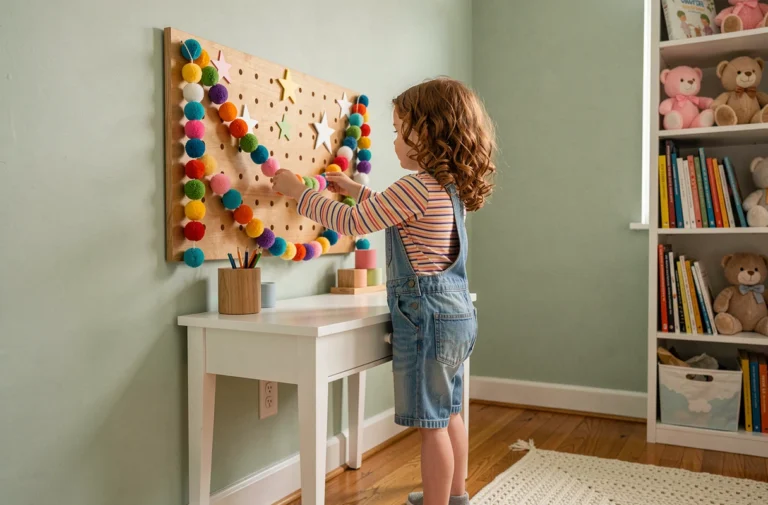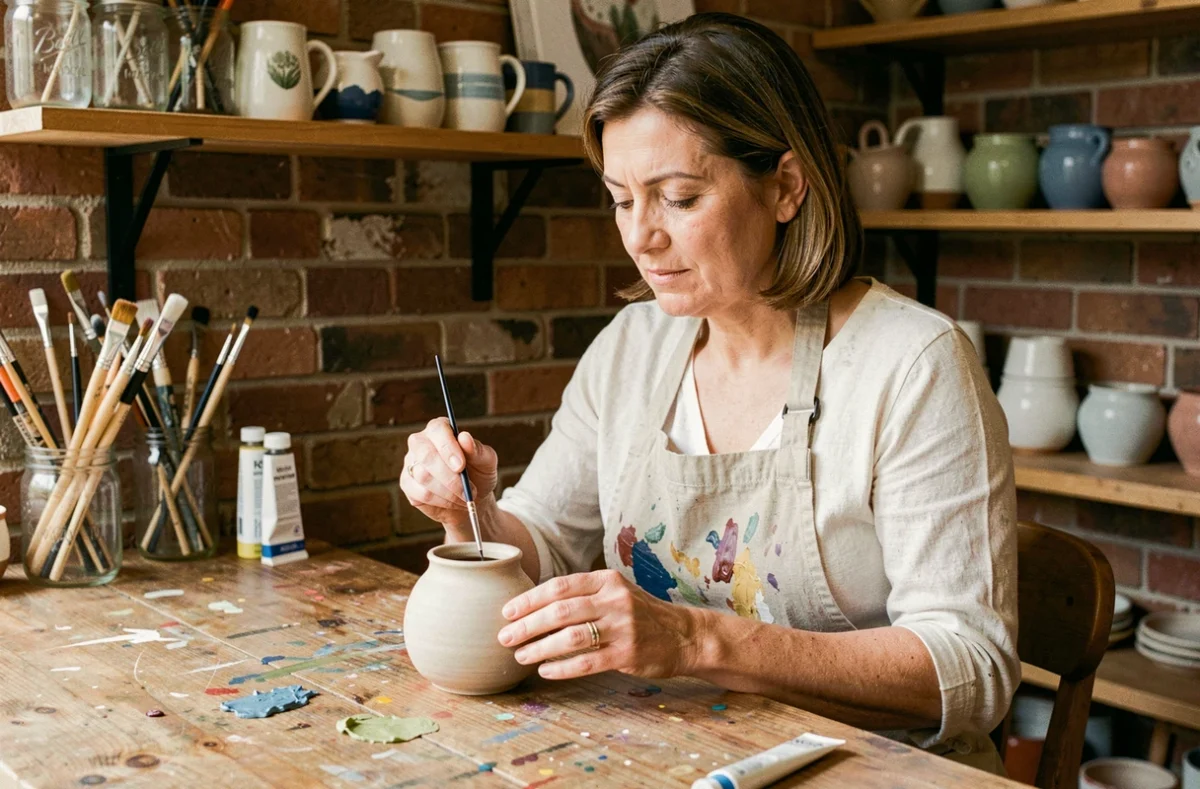
Creative leisure refers to any manual activity practiced for the pleasure of making, transforming, or decorating an object. Painting, embroidery, origami, paper work, or modeling: the term encompasses dozens of techniques, each with its own gestures, materials, and specific constraints. Understanding these distinctions allows one to choose a practice suited to their level and desires rather than collecting unopened kits.
Creative leisure materials: what conditions the practice
Before choosing an activity, one must consider the materials. The budget and available space guide the decision far more than the desire of the moment.
Watercolor, pastel drawing, or origami require a modest initial investment: a few sheets of paper, a palette, some pencils. These activities can fit on a corner of a table and can be stored away in seconds. In contrast, sewing requires a machine, a cutting board, and fabric by the meter. Ceramics necessitate access to a kiln, which pushes most beginners toward a shared workshop.
The quality of the materials directly influences the result. Low-quality brushes lose their bristles on the canvas, and a thread of embroidery that is too fine breaks at the first point of tension. Investing in decent materials from the start avoids the frustration that leads to giving up.
Specialized shops like ludivinepassion.fr offer supplies suitable for both beginners and experienced practitioners, with a level of detail on the references that large retailers do not provide.
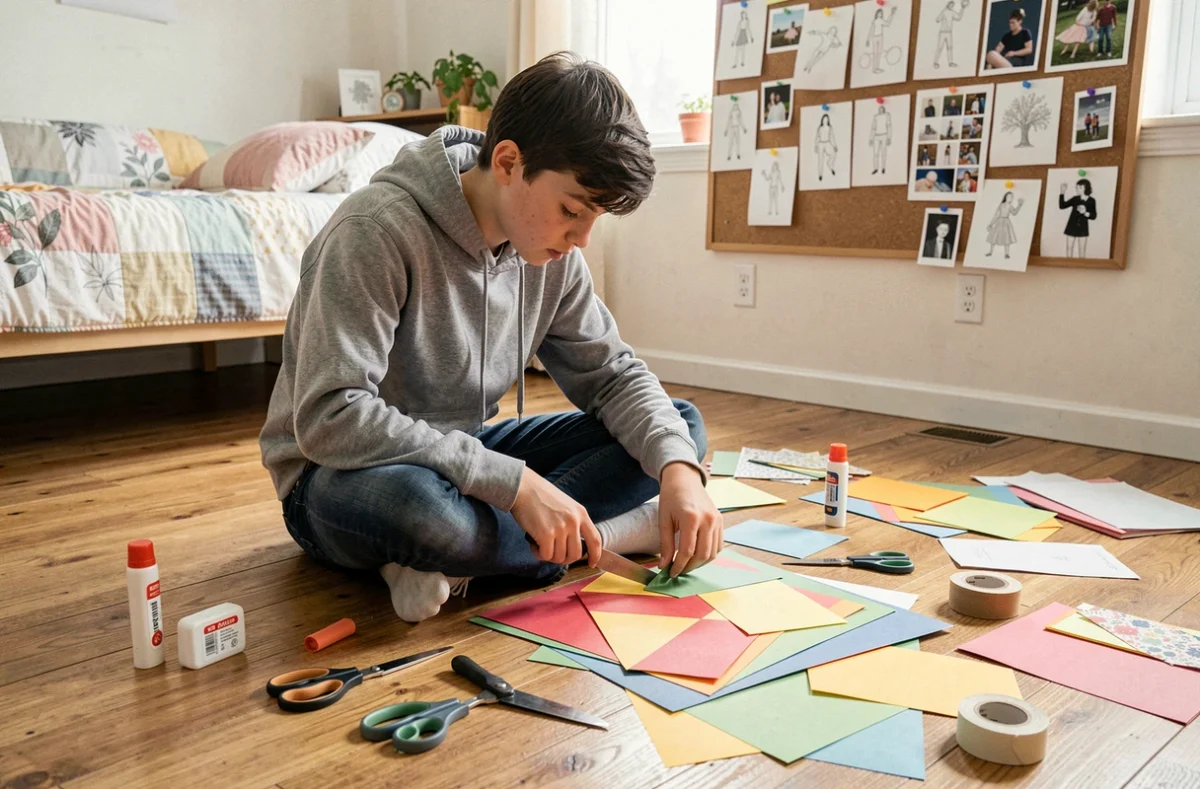
Another technical point: some supplies have a limited lifespan. Acrylic paint dries in its tube if the cap is not closed properly. Epoxy resin expires after a few months. Natural cotton macramé cord absorbs moisture and can mold in a poorly ventilated garage. Properly storing supplies is part of the practice.
Creative techniques for beginners: where to start
Modern embroidery, punch needle, and graphite pencil drawing are among the most accessible techniques. Their common point: a repetitive gesture that is learned quickly and produces a visible result in a few hours.
Punch needle, for example, involves pushing a latch needle into a stretched canvas to form loops of wool. The technique boils down to three movements. The result resembles tufting, but without an expensive machine. A frame, a needle, and a ball of yarn are enough for a first project.
Origami follows a different logic: each fold must be precise to the millimeter. Paper does not forgive approximation. This rigor attracts an audience seeking concentration rather than free relaxation. A square of paper with a sufficiently dense weight (like kami paper) yields better folds than a regular printer sheet.
For those who prefer color, watercolor offers a less intimidating introduction than oil painting. The transparency of the medium allows for layering without clumping, and mistakes can be corrected as long as the paper remains wet.
Criteria for choosing your first creative activity
- The available space: a studio leans towards drawing, origami, or embroidery rather than woodworking or pottery on a wheel
- The time per session: punch needle or acrylic painting allows for thirty-minute sessions, while sewing a garment spans several days
- Tolerance for error: watercolor and modeling allow for corrections, while cut paper or poured resin are less reversible
- The initial budget: origami costs the price of a block of paper, diamond embroidery that of a complete kit with pre-cut canvas
Creative workshops and short formats: learning outside the home
Creative leisure is no longer practiced solely at home. Participatory workshops, often organized in third places or cultural spaces, offer formats of about two hours suited to the time constraints of working adults. This short format works because it lowers the entry barrier: no need to buy materials, no need to master the technique before coming.
Pottery, woodworking, and handmade workshops are among the most sought after. The appeal lies as much in the digital disconnection as in the learning itself. Working with clay or wood with one’s hands for two hours creates a break effect that scrolling on a screen does not provide.
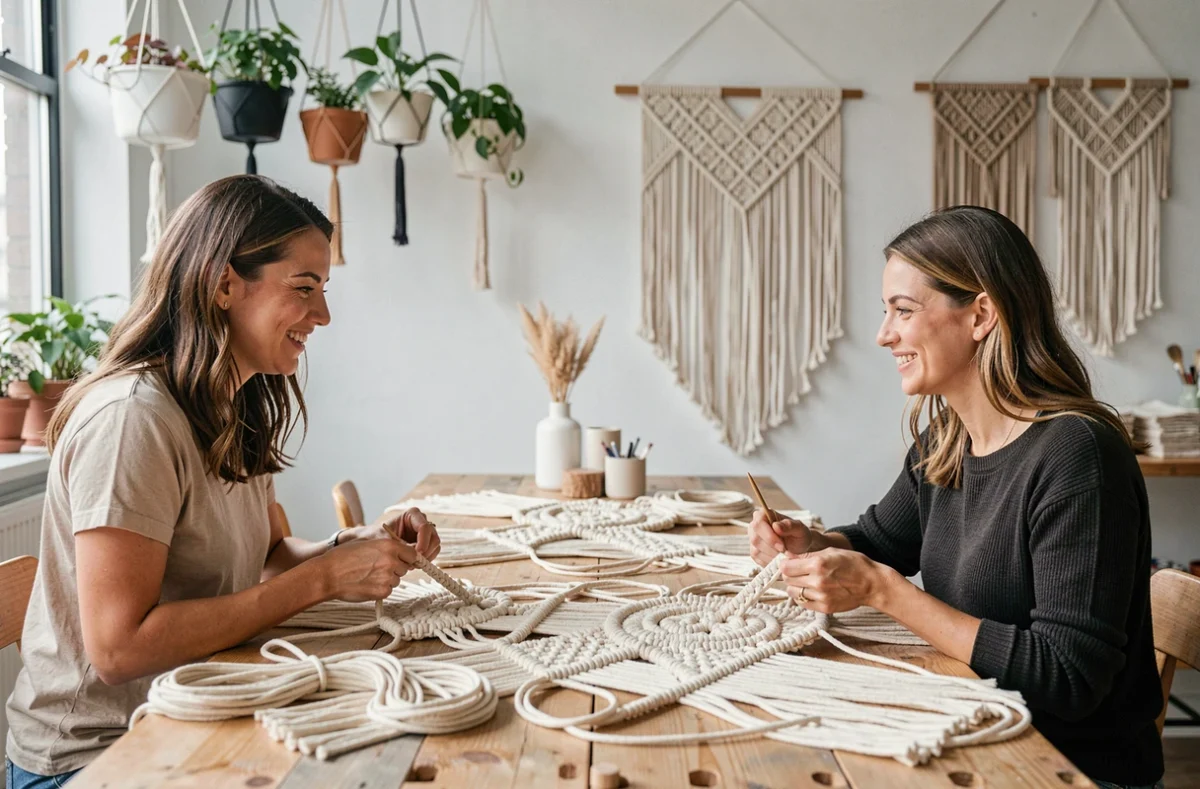
These workshops also serve a social function. Creating together, exchanging tips, comparing results: group creative leisure generates a bond that solitary practice cannot replace. Some third places organize recurring sessions that eventually form true communities of practice.
Regulations and selling creations: a framework to know
The line between leisure and commercial activity is becoming increasingly blurred. Social networks and sales platforms allow creators to monetize their skills, particularly in embroidery, crochet, journaling, and scrapbooking.
This evolution has concrete legal consequences. The European regulation 2023/988, applicable since December 13, 2024, imposes safety obligations on anyone making a product available on the market, including individuals selling on platforms. An embroidered cushion sold online must meet the same safety requirements for materials and consumer information as an industrial product.
Many amateur creators are unaware of this framework. Selling a few pieces on a marketplace without declaration or compliance verification exposes one to penalties. Before turning a hobby into a supplementary income, checking the declaration obligations (micro-enterprise, artisan status) and the applicable standards for the type of product made remains a step that creativity alone does not exempt one from.
Points of caution before selling
- Check if the product falls under the scope of the European regulation on general product safety
- Choose a legal status suitable for the expected sales volume (micro-enterprise, artisan registered with the chamber of trades)
- Document the materials used to be able to respond to a request for information from a buyer or a regulator
Creative leisure remains primarily a practice of pleasure. The regulation only concerns those who take the step of selling. For everyone else, the only risk is running out of space to store their creations.