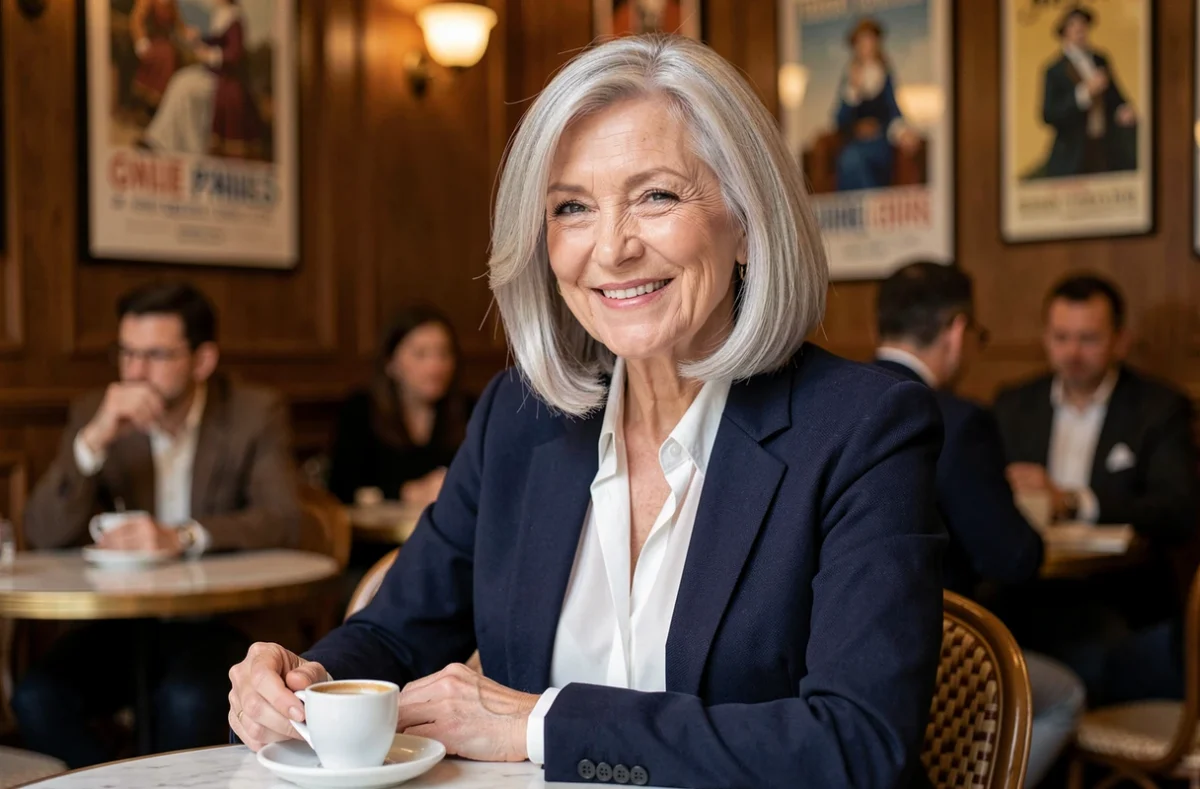
Choosing a haircut at 65 often means running up against a persistent assumption: go short. Magazines and salons almost always steer you toward a pixie or a very short bob. But the real question is different. Which haircut will still look elegant between salon visits, without a complicated styling routine every morning, while taking into account your hair’s actual density and how much time you want to spend on it?
Thinning hair at 65: going short isn’t the only option
Have you noticed your part getting wider or the top of your head looking less full? This is common with age. The usual response is to cut your hair shorter. That isn’t always the best choice.
A bob or collarbone-length cut, with a fairly blunt hemline and minimal layering, often creates a more convincing impression of fullness than a pixie. Even fine hair benefits from medium lengths. A blunt bob, for example, creates volume with its clean outline.
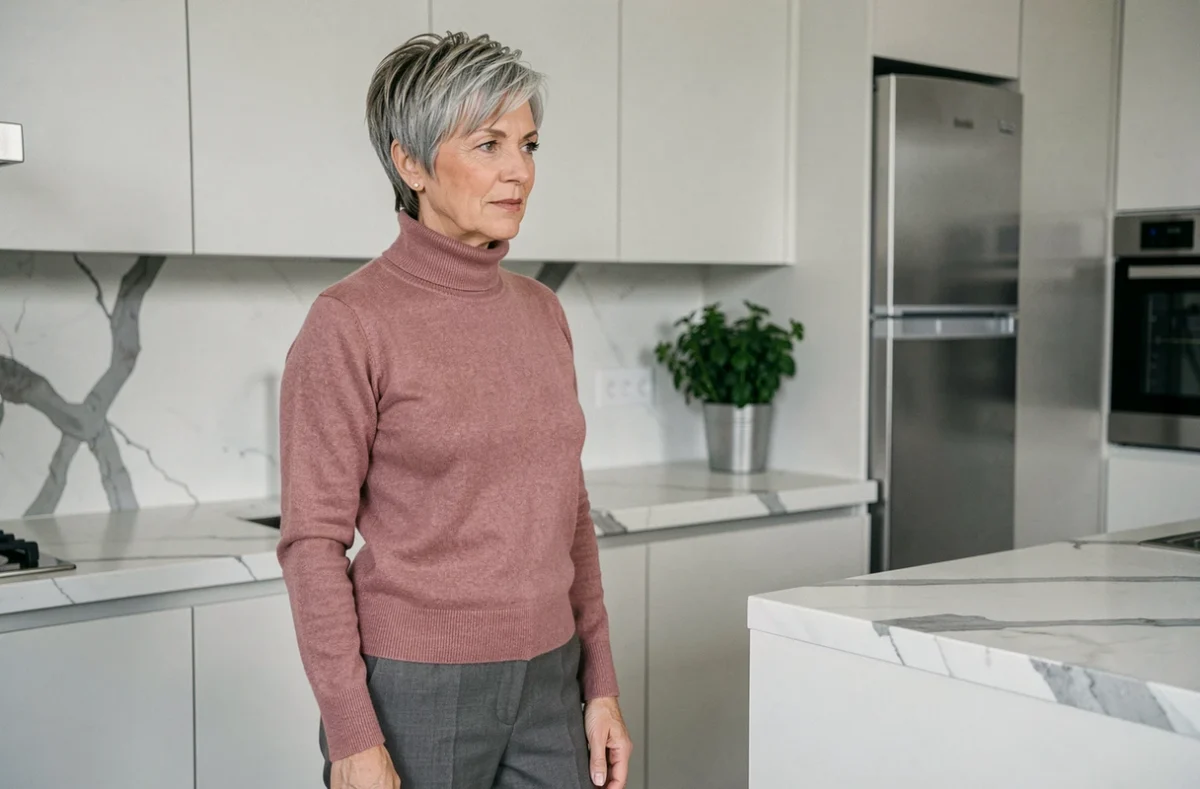
A pixie, on the other hand, needs frequent trims to maintain its shape. If you leave longer gaps between salon visits, regrowth quickly becomes noticeable and the cut can lose its shape within a few weeks. Before going short, ask your stylist how long the shape will last and how it will grow out. This simple question can often change your decision.
One thing to watch for: sudden hair loss, bald patches, or hair loss accompanied by scalp irritation isn’t a haircut issue. It’s a sign that warrants medical advice, not a styling solution.
To explore different styles suited to your hair texture and face shape, these tips on haircuts for women aged 65 cover practical options beyond the classic pixie.
Maintenance and daily styling: the real criteria for choosing a haircut
A haircut can look stunning in a salon photo and become a daily headache. The most reliable criterion is how long it actually takes to style, not how it looks on Instagram.
What each length involves in practice
- A pixie or very short cut needs a salon visit every three to four weeks to keep it looking sharp. Morning styling is quick, but the shape doesn’t hold up well if you put off a trim.
- A short bob (chin- or jaw-length) offers a good compromise: it holds its shape for longer and can be styled with a light blow-dry or simply air-dried, depending on your hair texture.
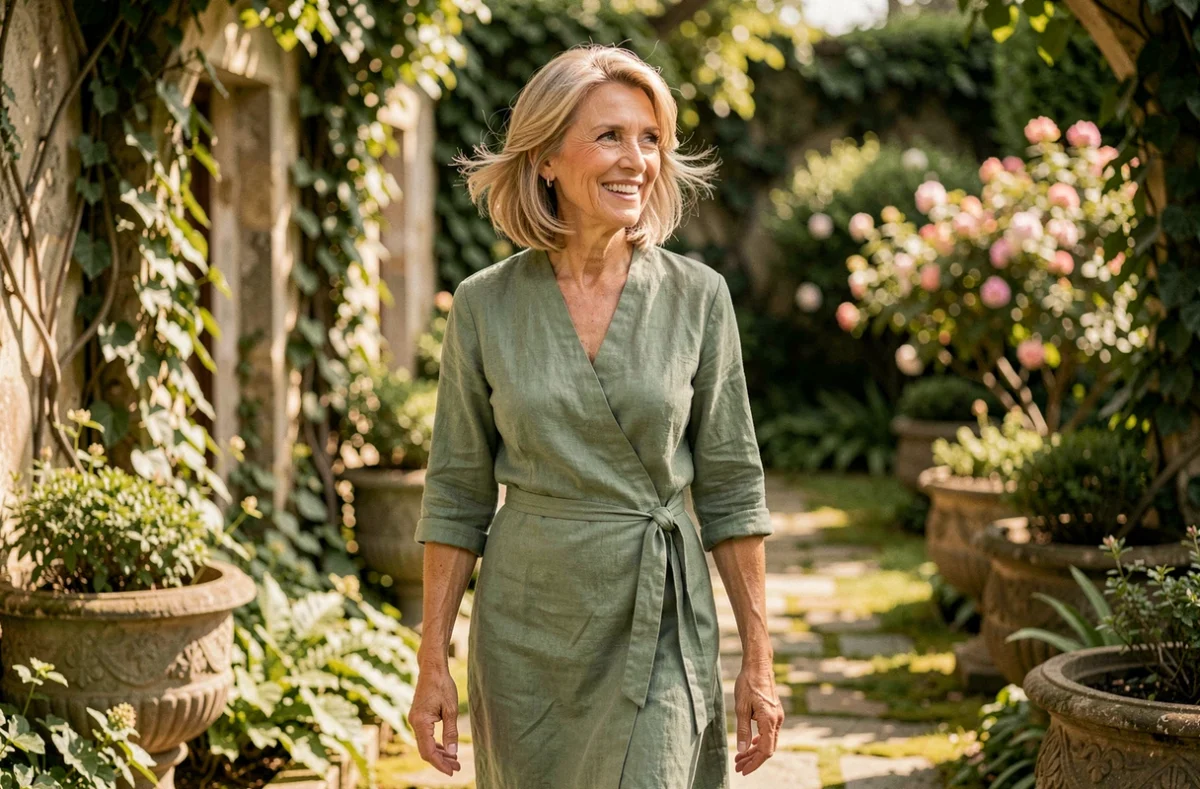
- Collarbone- or shoulder-length hair is the most forgiving between appointments. It also gives you options—updos, half-up styles, or natural waves—without much effort.
If you don’t want to spend more than five minutes in front of the mirror each morning, a medium-length cut with minimal layers will be your best bet. Heavily layered cuts add movement in photos, but need styling to avoid looking flat day to day.
Going gray: plan your haircut around your color
The question of going gray comes up sooner or later, and many women want to stop coloring their hair without going through an unsightly demarcation phase. Your haircut plays a direct role in this transition.
Blended highlights and tones (balayage, babylights) can soften the line between colored hair and natural regrowth. This technique works even better when the cut is designed for the natural texture of gray hair, which often looks drier and coarser.
Adapting your haircut to your gray hair’s texture means you won’t have to rely on all-over color. Wavy gray hair, for example, gains volume with a bob that’s slightly tapered at the ends, while straight, fine gray hair benefits more from a blunt line that creates the appearance of thickness.
If you’re considering this transition, talk to your stylist before your haircut, not afterward. Your plan for growing out your color directly affects the shape and length you choose.
Face shape and flattering haircuts after 60
You’ve probably read guides that group haircuts by face shape (oval, round, square, long). The idea is simple: choose a cut that softens or defines the features you want to balance.
A few practical pointers
- A round face looks more defined with a cut that adds length, such as a bob that’s slightly longer in front or a side-swept fringe.
- A long face looks more balanced with volume at the sides, created by a flared bob or waves.
- An oval face suits most lengths, so you can focus on choosing a style that’s easy to maintain.
- Your jawline and neck change with age: a cut that falls just below the jaw frames the face without drawing attention to sagging.
These pointers are guides, not rules. Your regular stylist knows your face better than any generic chart. Show them photos of cuts you like and ask how they’ll work with your hair texture and density.
A modern haircut at 65: what makes a difference day to day
Looking elegant at 65 doesn’t depend on finding a miracle haircut. It comes down to choosing a cut that works with your real-life habits. A haircut you can style yourself will stay looking good longer than a sophisticated style that requires a professional blow-dry.
Choose a clean shape, a length you can maintain with your usual salon visits, and a style that suits your hair as it is today. Current trends matter less than finding a haircut that fits your routine and lifestyle.
The best choice is one you won’t need to fix every morning. Ask your stylist three questions before deciding: how long the shape will last, how much styling it will need, and how it will grow out. The answers to these three questions are worth more than a celebrity photo.